
Short answer: Most homeowners pay somewhere between about $2,000 and $7,200 for a professional landscape design, with simple single-area plans coming in under that and whole-property master plans with 3D renderings running higher. The final number depends on how big and complex your property is, how detailed the plan needs to be, and whether the designer will also build it. In Southern Oregon, slopes, drainage, wildfire planning and coastal conditions are the factors that most often push a design toward the higher end.
If you’re planning a backyard remodel in Grants Pass, Medford or Brookings, the design fee is usually a small slice of the total project, and it’s the part that protects the rest of your budget. Here’s how pricing works, what you get at each level, and how to budget for it.
Typical Landscape Design Costs
National cost guides put the average landscape design (design only, before any construction) at roughly $4,500 to $4,600, with most projects falling between about $2,000 and $7,200. Very small plans can start around $500, and large, detailed master plans can reach $15,000. Every property is different, so the most accurate number comes from a consultation where the designer can see the site and hear what you want.
Designers usually price in one of four ways:
| Pricing method | Typical range | Best for |
|---|---|---|
| Hourly | About $50–$150 per hour | Consultations, small areas, revisions |
| Flat fee per plan | About $300 for a basic plan to $15,000 for a full master plan | Most residential projects |
| Percentage of project | About 15–20% of the landscaping budget on small and mid-size projects | Design firms that don’t build |
| Design-build | Varies; some companies apply part of the design fee toward installation | Homeowners who want one team from plan to finished yard |
These are national figures. Southern Oregon pricing tracks close to them, but your property, not your zip code, is what really moves the number.
What Affects the Cost of Landscape Design
1. Size of the Area You’re Designing
A plan for one patio and planting bed takes far less time than a plan for a full acre with a front yard, backyard, side yards and a driveway approach. Many homeowners start with the space they use most, usually the backyard, and plan the rest later.
2. Slope, Grading and Drainage
This is the biggest local factor. Much of the Rogue Valley and the hills around Grants Pass and Medford are sloped, rocky or heavy with clay. A good design has to solve where water goes, where retaining walls belong, and how to turn a hillside into usable space. That takes more site analysis and more drawing time, but it’s also where design saves the most money, because grading and drainage mistakes are expensive to fix after construction. Learn more in our guide to fixing a sloped backyard in Southern Oregon.
3. Hardscape vs. Planting
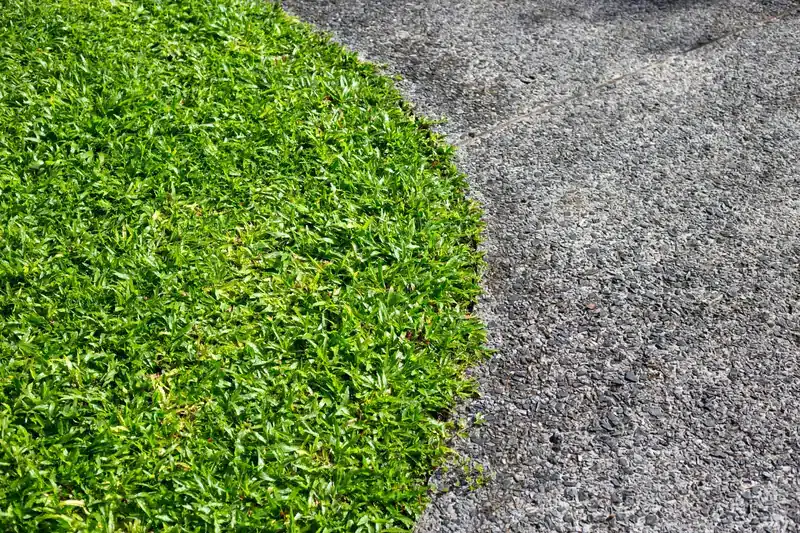
Plans heavy on hardscape (patios, retaining walls, outdoor kitchens, fire features, water features) need precise dimensions, materials and elevations. Planting-focused plans need careful plant selection for sun, water and soil. Most Southern Oregon projects need both, and the transitions between them, like where lawn meets a walkway, are part of what a good plan works out in advance.
4. Wildfire and Water Planning
Inland, many homeowners want a design that keeps defensible space around the house and uses drought-tolerant plants that don’t need constant irrigation. Building firewise spacing and water-wise planting into the plan from the start costs far less than retrofitting later. If water use is a priority, see how much xeriscaping costs in Southern Oregon.
5. Coastal Conditions in Brookings
On the coast, the design has to account for steady wind, salt air and heavy winter rain. That affects plant choices, wind protection for seating areas, drainage, and which materials and light fixtures will hold up. See our list of the best plants for coastal landscaping in Brookings.
6. Level of Detail: Concept Sketch, 2D Plan or 3D Rendering
- Concept sketch or consultation notes: the least expensive option. Good for small projects or a homeowner who plans to do the work themselves.
- 2D scaled plan: a top-down drawing showing layout, dimensions, materials and plants. This is what most contractors need to bid and build accurately.
- 3D rendering: a realistic view of the finished space, so you can see heights, views, materials and how the space feels before anything is built. It adds to the design cost, but it’s the easiest way to catch changes on screen instead of in concrete. Learn more about 3D landscape renderings.
7. Number of Revisions
Most design fees include a set number of revision rounds. Extra rounds, or major changes after the plan is approved, usually add cost. Ask how many rounds are included before you start.
Design-Only vs. Design-Build
With a design-only service, you pay for a plan and then hire a separate contractor (or do the work yourself). You own the plan and can bid it out, but you’re responsible for making sure the builder follows it.
With design-build, the same team designs and installs the project. The designer knows what the plan will cost to build, the crew knows exactly what the designer intended, and there’s one point of contact from first sketch to final walkthrough. Hawthorne Landscaping NW offers landscape design and installation across Southern Oregon, which keeps the design realistic for your budget and makes the handoff from plan to construction seamless.
Design Fee vs. Construction Budget
It helps to separate the two numbers:
- The design fee pays for site analysis, layout, materials, planting and drawings.
- The construction budget pays for grading, hardscape, plants, irrigation, lighting and labor.
The design fee is usually a small percentage of the total, and a good plan should help you spend the construction budget well: putting money where it matters, phasing work if needed, and avoiding change orders. A useful step in your first conversation with a designer is to share a realistic construction budget so the plan is drawn to fit it. For a sense of build costs, see how much a custom deck costs in Southern Oregon.

Is Professional Landscape Design Worth It?
For anything beyond a simple planting refresh, usually yes. A professional plan helps you:
- Avoid expensive grading, drainage and layout mistakes
- Get accurate, comparable bids because every contractor is pricing the same plan
- Build in phases without redoing earlier work
- See the finished space (especially with 3D) before committing to it
If you’re curious what working with a designer looks like, our post on how we bring your landscape vision to life walks through the process.
How to Budget for Landscape Design
- Decide on the scope. One area, the backyard, or the whole property?
- Set a construction budget range. Even a rough range keeps the design realistic.
- Choose the level of detail. A 2D plan for building; add 3D if you want to see it first.
- Ask what’s included. Consultation, site visit, revision rounds, plant list, materials list, and whether the fee is credited toward installation.
- Plan for phasing. A full plan built in stages often costs less over time than separate small projects.
Frequently Asked Questions
How much does a landscape designer charge per hour?
Most landscape designers charge roughly $50 to $150 per hour, with some charging more for on-site project management. Many residential projects are priced as a flat fee instead.
How much does a 3D landscape design cost?
3D renderings add to the cost of a 2D plan because they take more modeling time. For most homeowners the added cost is small compared with the construction budget, and it helps avoid changes during the build.
Is the first landscape design consultation free?
It depends on the company. Some offer a free initial conversation and charge for the site visit and design work; others charge a consultation fee. Ask up front so there are no surprises.
Does a landscape plan include the plant list and materials?
A full plan typically includes the layout, hardscape materials, plant selections and quantities, and key dimensions. Ask any designer exactly what their plan includes before you sign.
Can I install the design myself?
Yes. Some homeowners buy a plan and install it themselves or in phases. Grading, retaining walls, drainage and electrical work are best left to licensed professionals.
How long does landscape design take?
Simple plans can be ready in a couple of weeks; larger plans with 3D renderings and revisions take longer. Designing in fall and winter means you’re ready to build when spring arrives.
Plan Your Southern Oregon Landscape With Hawthorne
Hawthorne Landscaping NW designs and builds outdoor spaces in Grants Pass, Medford, Brookings and surrounding Southern Oregon communities, from hillside backyards to coastal gardens. Fall and winter are the best time to design, so your project is ready to build in spring.
Ready to start planning your project? Request a landscape design consultation here.