Short answer: A fire pit is usually the better choice if you want an affordable, social, 360-degree gathering spot in an open yard. An outdoor fireplace is better if you want a built-in focal point, more directed heat, wind protection and a sense of enclosure. In Southern Oregon, wind, smoke, fire season and how you’ll use the space in winter usually decide it.
If you’re weighing a fire feature for a backyard in Grants Pass, Medford or Brookings, this guide walks through the real trade-offs. When you’re ready to design one, our fire pit and fire feature design service can plan it around your patio, seating and site.
Key takeaways
- Fire pits cost less, seat more people around them and fit more layouts.
- Outdoor fireplaces cost more but block wind, direct heat toward seating and anchor an outdoor room.
- Gas (propane or natural gas) runs cleaner and is easier to use through Southern Oregon’s fire season than wood.
- Placement matters as much as the feature: clearance from the house, trees and overhangs comes first.
- On the coast, wind and rain change the answer; inland, smoke and summer fire danger do.
What Is the Difference Between a Fire Pit and an Outdoor Fireplace?
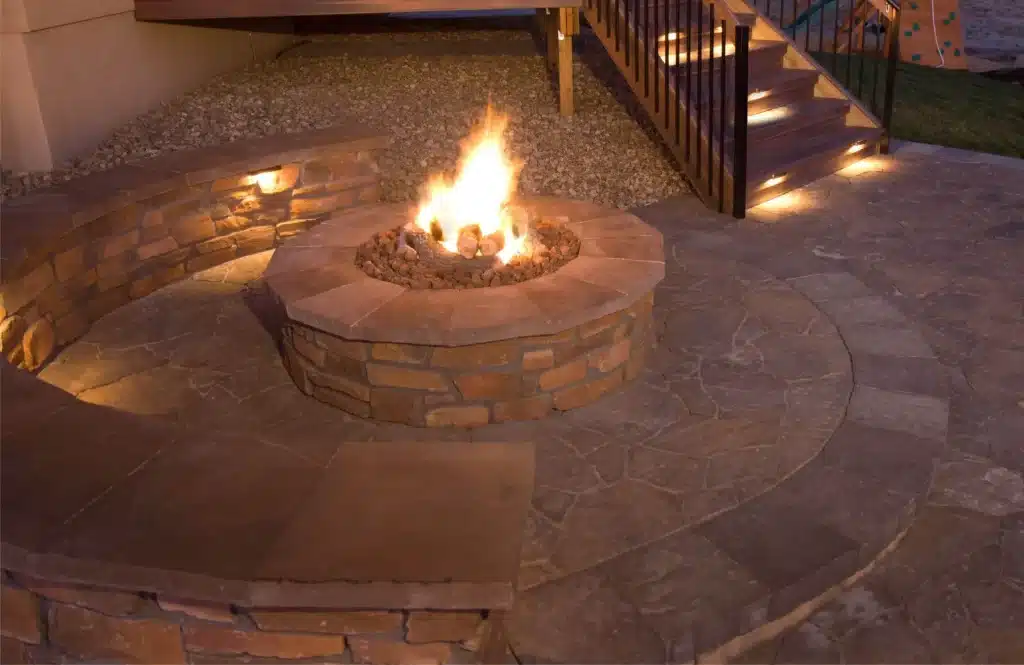
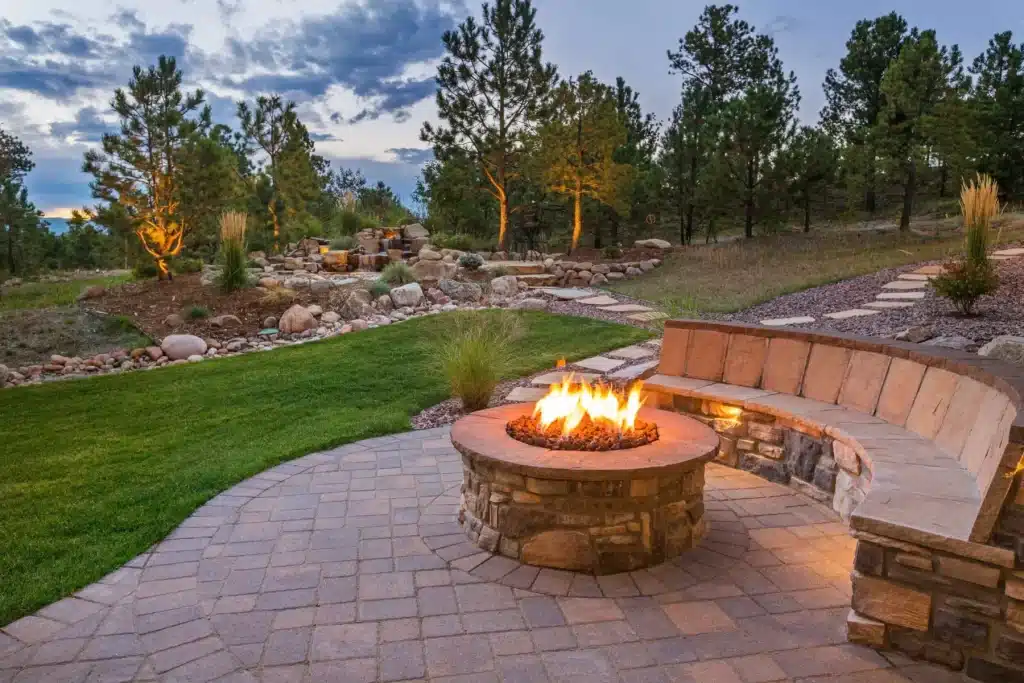
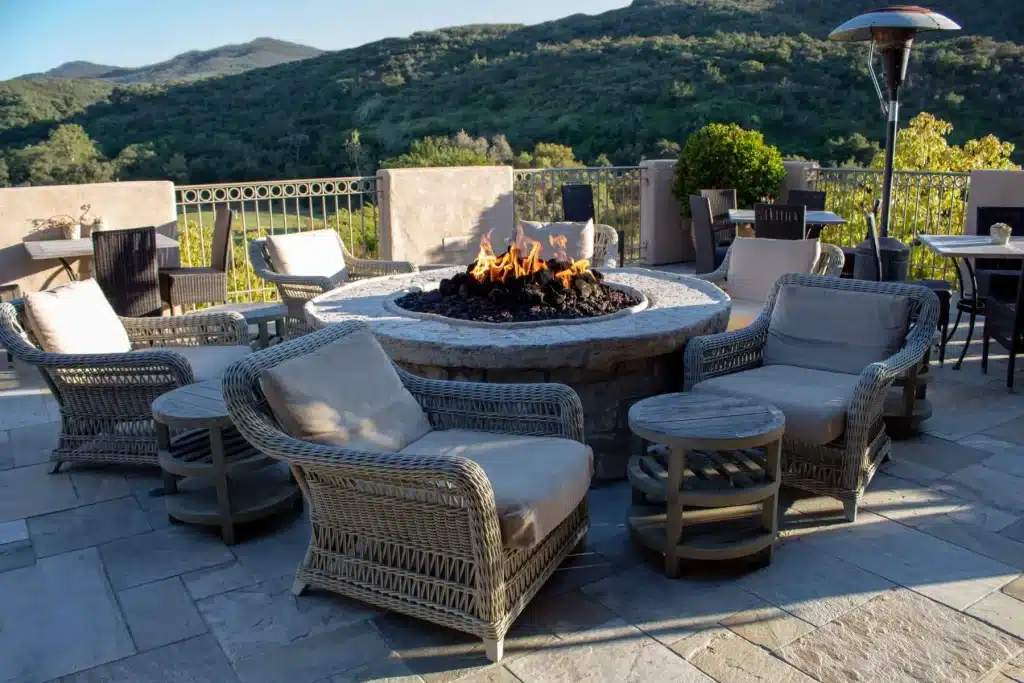
A fire pit is an open, low fire feature, usually round or square, that people sit around on all sides. It can be a masonry ring, a stone or paver surround, or a gas fire table set into a patio.
An outdoor fireplace is a vertical, built structure with a firebox and a chimney or flue. It faces one direction, so seating is arranged in front of it, much like a living room. Many homeowners pair it with a covered patio or an outdoor kitchen to create a true outdoor room.
Fire Pit vs. Outdoor Fireplace: How Do They Compare?
| Factor | Fire pit | Outdoor fireplace |
|---|---|---|
| Upfront cost | Lower; simplest builds are a fraction of a fireplace | Higher; more masonry, footings and chimney work |
| Seating | Up to 360 degrees, casual and social | One side, more like a living room |
| Heat | Radiates in all directions; less effective in wind | Directs heat forward toward seating |
| Smoke (wood) | Shifts with the wind toward guests | Chimney carries much of it up and away |
| Wind | Most exposed | Back and sides block wind |
| Footprint | Small; fits most patios | Larger; needs a solid base and clearance above |
| Visual impact | Low profile; keeps views open | Strong focal point; can block views |
| Best for | Open yards, families, gatherings, tighter budgets | Covered patios, outdoor rooms, windy sites |
Which Costs More, a Fire Pit or an Outdoor Fireplace?
A fire pit almost always costs less. A fireplace needs a reinforced footing, a firebox, a chimney or flue and more masonry, so it takes more material and labor.
What moves the price on either one:
- Fuel type. Gas needs a line run from the house or a propane tank, plus a burner and controls. Wood needs none of that but needs a durable firebox or liner.
- Materials. Natural stone, stucco, pavers and concrete all price differently. Matching the stone to your patio or walls adds cost but ties the space together.
- Site work. Slopes, rocky or clay soils and drainage can mean grading or a retaining wall before anything else is built. Our hardscaping team handles the base work, patio and walls together.
- What surrounds it. Built-in seat walls, lighting, a pergola or a full patio often cost more than the fire feature itself.
If you’re budgeting a whole backyard, our guide to landscape design costs in Southern Oregon explains how to separate design fees from the construction budget.
Gas or Wood: Which Is Better in Southern Oregon?
Both work, but gas is the easier choice for many Rogue Valley homeowners.
Gas (propane or natural gas)
- Lights instantly and shuts off with a valve or switch.
- No sparks, embers or ash to clean up.
- Little smoke, which matters for neighbors and for guests with asthma.
- Easier to use during fire season. In 2026, the Oregon Department of Forestry’s fire-season restrictions in Jackson and Josephine counties still allowed portable fire pits that use bottled fuels in cleared areas. Rules change by year and fire danger level, so always check before you light.
Wood
- The crackle, smell and look many people want.
- No gas line or tank needed.
- More smoke and embers, more cleanup and more attention while it burns.
- More likely to be limited during high fire danger.
A common compromise is a gas fire feature that can be enjoyed most of the year, with wood-burning reserved for the wet season.
How Do Wind, Smoke and Weather Change the Decision?
Inland: Grants Pass, Medford and the Rogue Valley
Summers are hot and dry, and wildfire smoke can settle into the valley. Evenings cool off, so a fire feature gets plenty of use in spring and fall. Wood smoke from a fire pit drifts toward guests; a fireplace’s chimney moves more of it up and away. If your property is sloped, the fire feature often becomes the reason to build a flat, usable terrace. Our post on fixing a sloped backyard in Southern Oregon covers how that works.
Coast: Brookings
Steady wind and heavy winter rain are the bigger issues. An open fire pit can be hard to enjoy in a strong onshore breeze, while a fireplace or a fire pit tucked behind a seat wall or windbreak stays usable. Salt air also affects metal parts, so burners, screens and fixtures need corrosion-resistant materials. See our Brookings landscape design page for how we design around coastal conditions.
How Far Should a Fire Feature Be From the House?
Clearance is the first design decision, not the last. Keep any fire feature away from the house, wood decks, fences, overhangs and tree branches, and keep the area around it free of flammable plants and bark mulch.
Local rules vary by fire district. For example, Jackson County Fire District 3 does not regulate confined fire pits, fire tables and outdoor fireplaces that burn clean fuel inside a noncombustible enclosure, but it requires open recreational fires to stay at least 25 feet from structures and combustible material, with an extinguisher or water source on hand. Your district may differ, and gas features must also meet the manufacturer’s clearances.
If wildfire risk is a concern on your property, the fire feature should be part of a firewise plan for the whole yard, with gravel or pavers close to the house and well-spaced plantings beyond.
Which One Fits How You’ll Use Your Backyard?
Choose a fire pit if you:
- Want the most seating for the budget
- Host groups, kids or casual evenings
- Have an open yard with views you don’t want to block
- Want to add a fire feature to an existing patio
Choose an outdoor fireplace if you:
- Want a built-in focal point and a defined outdoor room
- Have a windy site or a coastal property
- Plan a covered patio, pergola or outdoor kitchen nearby
- Want to cut down on wood smoke reaching guests
Not sure? A 3D rendering lets you see both options in your actual yard, at real scale, before anything is built.
Frequently Asked Questions
Is a fire pit or an outdoor fireplace better for heat?
An outdoor fireplace usually feels warmer for people sitting in front of it, because the back wall reflects heat forward and blocks wind. A fire pit spreads heat in every direction, so it warms more people a little rather than a few people a lot. On calm evenings a fire pit is plenty; on windy nights a fireplace stays comfortable longer.
Can I use a fire pit during fire season in Southern Oregon?
It depends on the year, the fire danger level and your location. In 2026, the Oregon Department of Forestry’s fire-season rules for Jackson and Josephine counties allowed portable fire pits using bottled fuels such as propane in cleared areas, while debris burning was banned. Restrictions tighten as danger rises, so check your local fire district before lighting any fire.
Can a wood-burning fire pit be converted to gas later?
Often, yes, if the fire pit was built with enough interior room for a burner and a way to bring in a gas line or propane supply. Planning for it during the design stage costs far less than retrofitting. If you think you’ll want gas eventually, ask your designer to run a sleeve or conduit when the patio is built.
How much space do I need for a fire pit seating area?
You need room for the fire pit itself, a safe clear zone around it, and seating with space to walk behind the chairs. In practice that means a fire pit area usually needs a larger patio than people expect. A designer can lay out the circle at real scale so chairs, walkways and clearances all fit before construction.
Does a fire feature add value to a home?
A well-built fire feature can make an outdoor space more usable through spring and fall and more appealing to buyers, especially when it is part of a complete patio design. It adds the most value when it fits the rest of the landscape rather than standing alone. Our post on how a landscape remodel can increase your home value goes deeper.
Plan Your Fire Feature With Hawthorne Landscaping NW
Hawthorne Landscaping NW designs and builds fire pits, outdoor fireplaces and the patios around them for homeowners in Grants Pass, Medford, Brookings and surrounding Southern Oregon communities. We plan the fire feature, seating, lighting and plantings together, so the space works in every season and fits your site. Fall and winter are a good time to design so your project is ready to build in spring.
Request a fire feature design consultation to get started, or explore our fire pit and fire feature design service.
Leave a Comment